
Kala
    Kala
    Kala

    Shopify Subscriptions: A Practical Guide for Scaling DTC Brands

    Kaloyan ChirovKaloyan Chirov, Founder, Kala Partners

    Last Updated: March 2026 · 18 min read

    Subscriptions have become one of the most valuable growth levers in ecommerce, not because they are trendy, but because they work. Predictable revenue, higher customer lifetime value, and better inventory planning all compound over time into a fundamentally stronger business.

    Explore Our Services

    SHOPIFY SUBSCRIPTIONS

    Subscriptions on Shopify

    Keep cash flowing and loyalty growing with subscriptions

    Why Subscriptions Matter for Growing Brands

    The global subscription ecommerce market is projected to surpass $330 billion in 2026, and the economics behind that number are straightforward. Subscribers spend significantly more over their lifetime than one-time buyers, often 2–3× more, and they cost less to retain than to acquire. As paid acquisition costs continue to rise across Meta, Google, and TikTok, the brands with strong subscription programmes have a structural advantage: a meaningful portion of their revenue does not depend on ad spend.

    Predictable cash flow changes how you run the whole business. When 30% or more of revenue comes in on a known schedule, forecasting improves, inventory management becomes more reliable, and you can invest in growth with more confidence. You are no longer guessing what next month looks like.

    For scaling brands, subscriptions are not just a revenue stream. They are infrastructure.
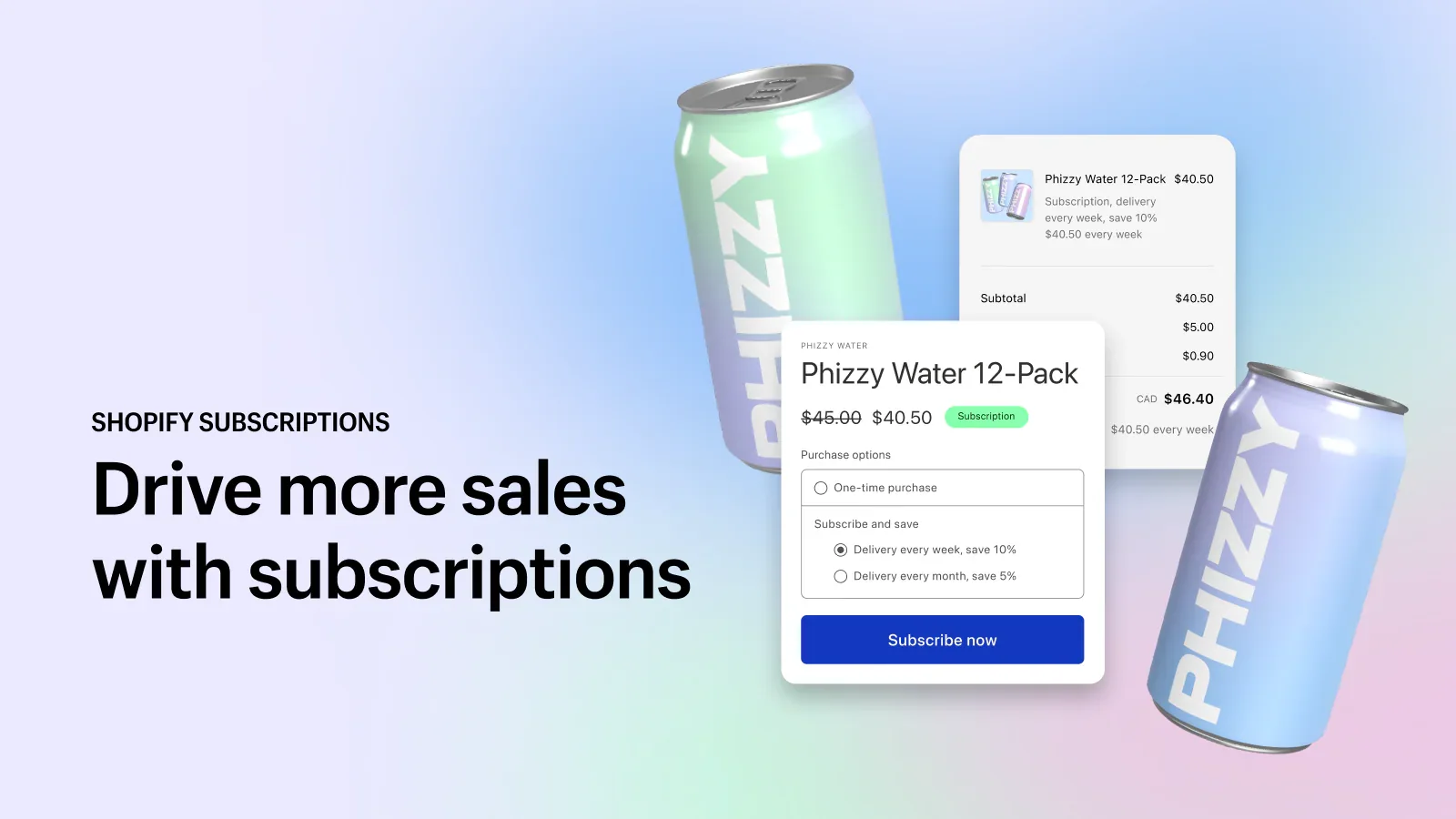
    Drive more sales with Shopify subscriptions
    Shopify's native subscription tools let you offer subscribe-and-save options directly on your product pages.

    The Subscription Models That Work

    Not every model suits every product. Getting this right from the start saves significant rework later.

    Replenishment subscriptions are the most common and the most straightforward. Customers receive regular deliveries of products they already use and would buy anyway, coffee, supplements, skincare, pet food, household staples. The value proposition is convenience plus a modest discount. These work best when your product has a natural consumption cycle and you can map delivery frequency to actual usage patterns.

    Curation subscriptions are a different model entirely. The subscription itself is the product. Customers pay for discovery, curated beauty boxes, wine clubs, book subscriptions. This model commands premium pricing because the curation adds genuine value beyond the products.

    Access and membership models sell perks rather than products. Exclusive pricing, early access to launches, members-only content, or premium services. These work especially well for brands with strong existing loyalty, and they can be layered on top of replenishment subscriptions.

    Build-a-box and hybrid models give customers control over what they receive while maintaining the recurring relationship. More complex to implement, but often the most effective at retaining subscribers long-term because the programme adapts to what customers actually want.

    The strongest subscription programmes tend to blend elements from multiple models. Start with one model that fits your product, then layer in flexibility as you learn what your customers actually want.

    How to Set Up Subscriptions in Shopify

    Setting up subscriptions in Shopify is straightforward once you understand the moving parts.

    Step 1: Choose your subscription app. Shopify's native subscription functionality is basic and works for brands just testing the model. For anything serious, you will need a third-party app. The main options are Recharge, Skio, Loop Subscriptions, and Stay AI.

    Step 2: Configure your subscription plans. Define delivery intervals (weekly, monthly, or custom), discounts for subscribing versus one-time purchase, and shipping settings. Build in flexibility from the start: multiple intervals, the ability to skip or pause, easy product swaps.

    Step 3: Add subscriptions to your products. Most apps add a widget to your product pages where customers choose between one-time purchase and subscription. On Shopify Plus, you have more control over how this integrates into the checkout flow.

    Step 4: Set up the customer portal and communications. Your subscription app includes a portal where subscribers manage their account, pausing, swapping products, updating payment details. Set up transactional emails for confirmations, upcoming renewals, and failed payments.

    Step 5: Test the full subscriber journey. This step is skipped more often than it should be. Place a test order, go through the confirmation emails, try managing the subscription through the portal, attempt a pause, attempt a cancellation. Problems that seem minor in isolation compound into churn at scale.

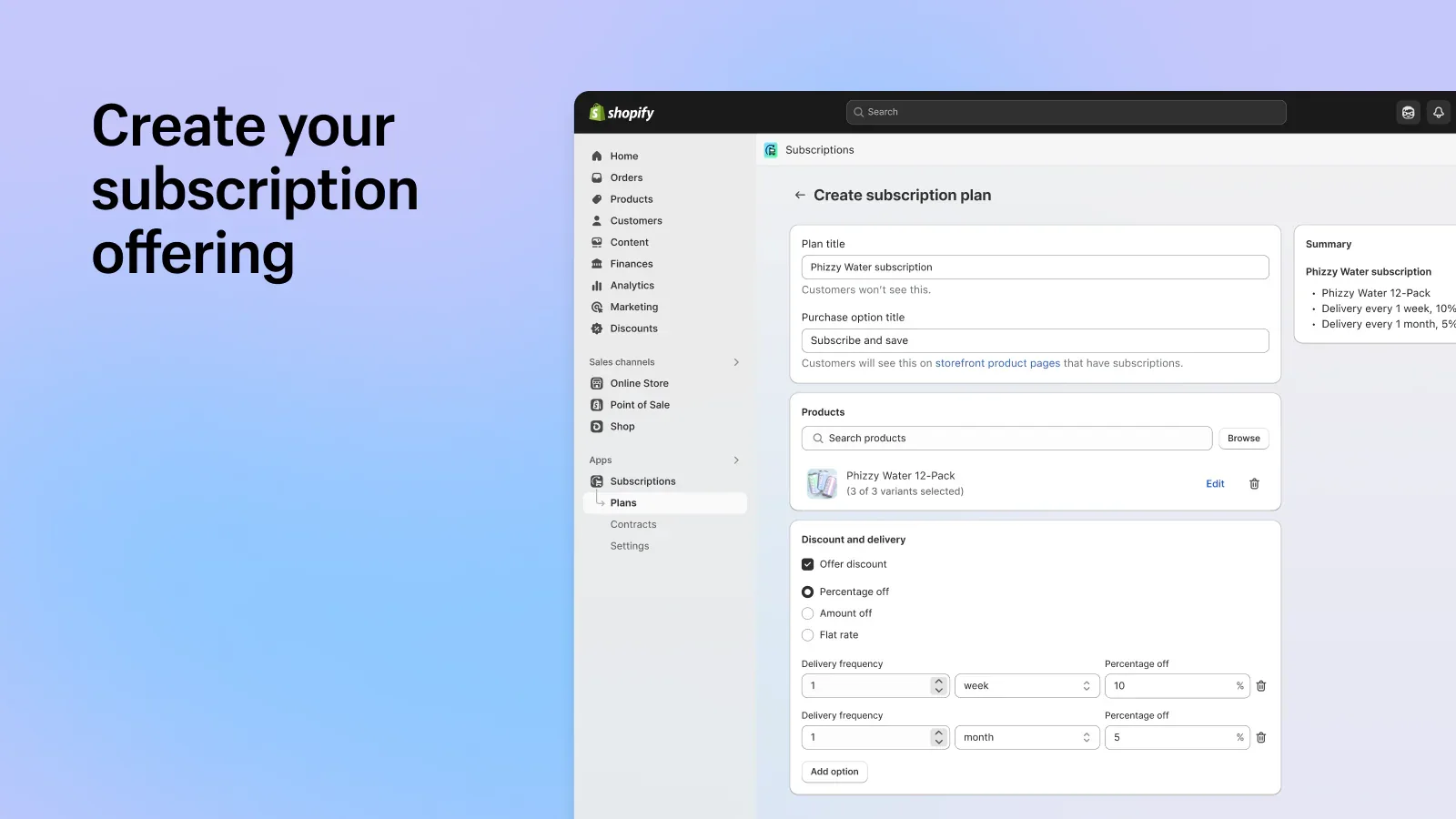
    Create a subscription plan in Shopify admin
    Creating a subscription plan in the Shopify admin, define products, delivery frequency, and discount tiers.

    Choosing Your Subscription Platform

    Your platform choice shapes what is possible as you scale.

    Shopify Native Subscriptions: Free and integrated. Works for brands testing subscriptions or running simple replenishment models. The ceiling is low: basic analytics, limited customisation, minimal churn reduction tools. Most brands outgrow it quickly.

    Recharge: The market leader with enterprise-grade features and extensive customisation. Handles complex subscription logic well and integrates with most DTC tools. The trade-off is complexity and cost. Pricing starts at $99/month plus transaction fees.

    Skio: Built specifically for high-growth DTC brands, with a focus on subscriber retention and experience. Passwordless login, modern customer portals, sophisticated cancellation flows. Strong choice if retention is your primary concern.

    Loop Subscriptions: A solid mid-market option with good retention tooling and analytics. Gamification features and loyalty programme integrations can increase subscriber lifetime value.

    Stay AI: Worth consideration for brands that want AI-driven churn prediction and automated reactivation. Built-in tools for predicting which subscribers are at risk.

    For brands operating at scale on Shopify Plus, the decision typically comes down to Recharge versus Skio. If you need maximum customisation and complex logic, Recharge. If you prioritise a streamlined subscriber experience and retention-first tooling, Skio.

    Growing Your Subscriber Base

    Having a subscription option available is not a growth strategy. Active subscriber acquisition requires deliberate effort across multiple touchpoints.

    Convert existing customers first. Your one-time buyers are your best subscription prospects. Post-purchase flows introducing subscription options to repeat buyers consistently outperform attempts to convert cold traffic directly. Timing matters: introduce subscriptions when customers are most receptive, after they have received and used their first order.

    Build dedicated subscription landing pages. A product page with a subscription widget is not enough for customers who need convincing. Dedicated landing pages let you tell the full story: what subscribers receive, what the value is, how it works. Crucially, they address the objections that prevent sign-ups.

    Structure incentives carefully. A 10–15% discount for subscribing adds real value without destroying your margins. A large first-order discount (20–25%+) can spike initial conversions but tends to attract subscribers who churn quickly. Milestone rewards, a free gift at 3 months, 6 months, 12 months, reward loyalty and give subscribers a reason to stay.

    Build dedicated acquisition flows in email and SMS. Subscription-focused flows are different from standard promotional emails. They educate your audience about the subscription model, address common objections, and build the case for recurring purchase over time.

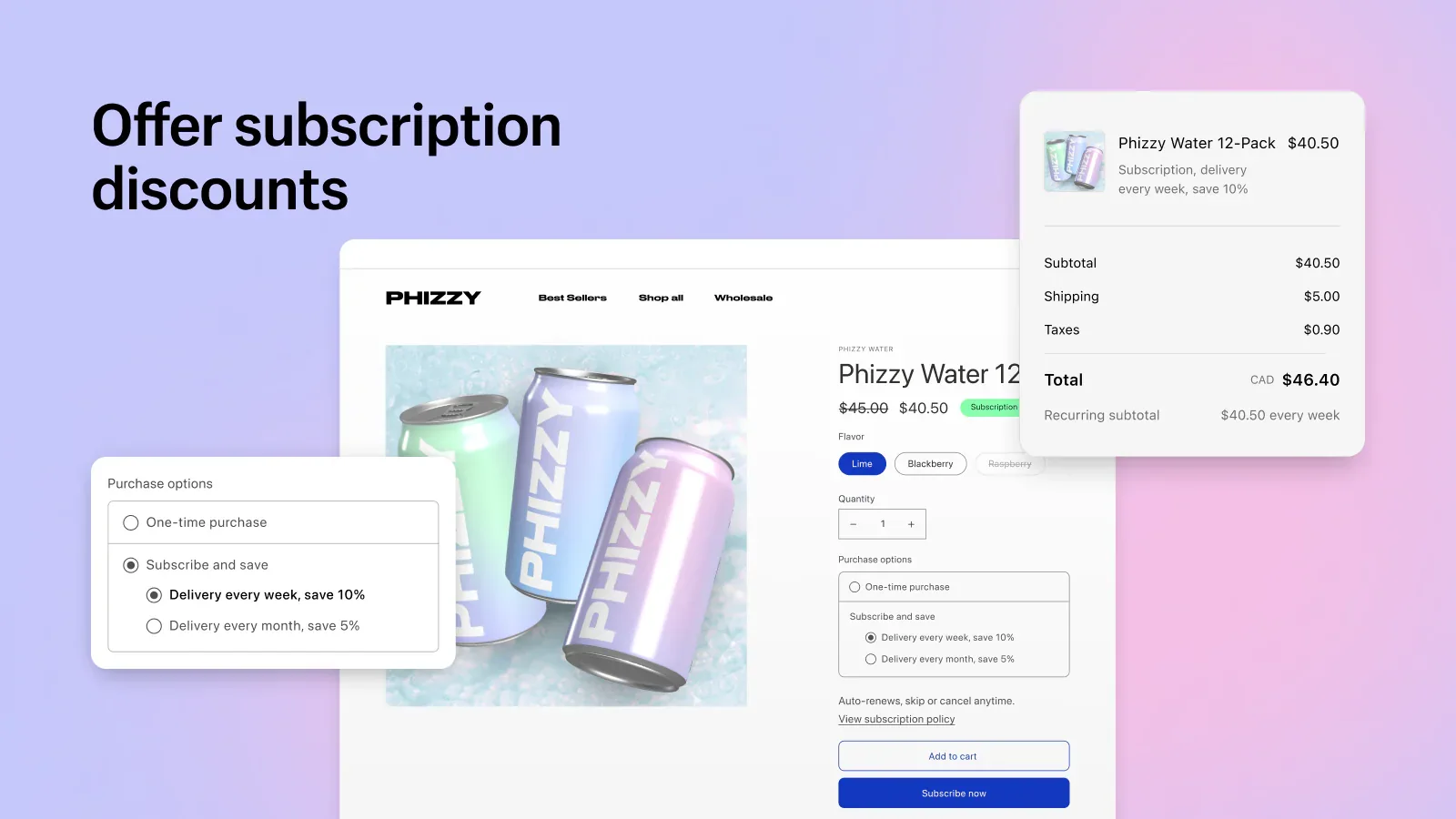
    Offer subscription discounts on Shopify
    Subscription discounts encourage repeat purchases, offer tiered savings based on delivery frequency.

    Increasing Subscriber AOV

    Growing the number of subscribers is only part of the equation. Increasing how much each subscriber spends per order directly improves subscription revenue.

    Upsells within subscriptions. Subscribers who trust you enough to commit to recurring purchases are often open to upgrades. A subscriber on your standard coffee blend may move to a premium single-origin. Present upsell opportunities at natural moments: when subscribers log in to manage their account, in order confirmation emails, or through targeted upgrade campaigns.

    Cross-sells and one-time add-ons. One-time additions to subscription orders let customers try new products without committing to another recurring purchase. This is particularly effective for new product launches.

    Tiered subscription options. Multiple subscription tiers at different price points let customers self-select based on their needs and budget. Design tiers so that the middle option is genuinely the best value for most customers.

    Build in flexibility. Counterintuitively, giving subscribers more control can increase AOV. When customers can easily adjust quantities, swap products, or change frequency, they are more likely to order what they actually want rather than cancelling.

    Reducing Churn at Scale

    Acquisition gets attention. Retention determines profitability. Reducing churn by even a few percentage points has a compounding impact on lifetime value.

    Understand why subscribers leave before trying to fix it. The reasons subscribers cancel usually fall into a few categories: too much product, wanting to try something different, price concerns, or changed circumstances. Build cancellation flows that collect this data. When someone clicks cancel, ask why and offer appropriate alternatives.

    Treat failed payments as a retention problem. Failed payments cause a significant amount of involuntary churn that is entirely preventable. Cards expire, banks flag unusual charges, temporary insufficient funds happen. Build automated retry sequences, send clear notifications, and escalate urgency as a delivery date approaches.

    Design a proper cancellation flow. The goal is not to make cancellation difficult. That destroys trust. The goal is to ensure subscribers are aware of their alternatives before they go. A well-designed flow presents options based on the stated reason for leaving.

    Run win-back campaigns strategically. A campaign targeting lapsed subscribers 30 days after cancellation catches those who may have acted impulsively. Another at 90 days reaches those who may have run through remaining product. Personalise based on the reason they cancelled.

    Custom Implementation vs. Default Widgets

    Every subscription platform ships with out-of-the-box widgets and customer portals that you can install in an afternoon. For some brands, that is sufficient. For brands where experience matters, custom implementation is not optional.

    Default subscription widgets are designed to work for everyone, which means they are not optimised for anyone. They sit on your product pages looking exactly like what they are: third-party add-ons that do not match your store's design language.

    The customer portal is often worse. Default subscription management interfaces bear no resemblance to your store. Subscribers click through to manage their account and land on something that looks like a completely different website.

    Custom implementation means building subscription touchpoints that feel native to your brand. Product page widgets that match your design system. Customer portals that extend your store's look and feel. Modern subscription platforms like Skio and Recharge offer robust APIs that allow developers to build custom interfaces while using the platform's backend infrastructure.

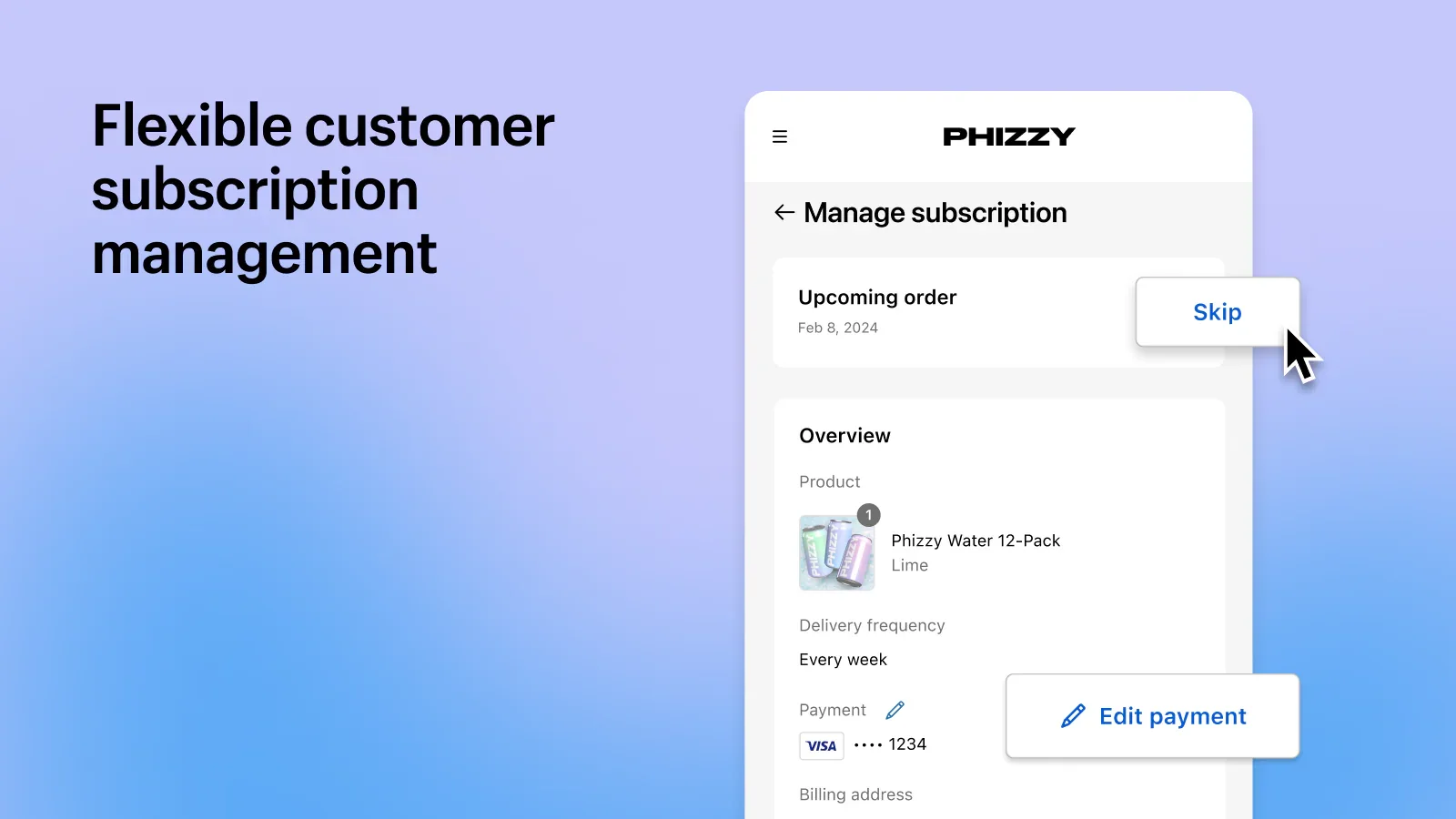
    Flexible customer subscription management portal
    A branded subscription management portal lets customers skip, pause, or edit their subscription with ease.

    Migrating Between Platforms

    If you have outgrown your current subscription platform or need capabilities it does not offer, migration becomes necessary. Done well, subscribers barely notice. Done poorly, you lose subscribers and revenue during the transition.

    When to migrate. Consider migration when your current platform is actively limiting growth: you need features it does not support, the subscriber experience is hurting retention, costs have become disproportionate to value, or integration limitations are blocking other initiatives.

    How to migrate well. Start with thorough data mapping, every subscriber, their subscription details, payment information, upcoming orders, and history needs to transfer accurately. Test with a small cohort before the full migration. Communicate proactively with subscribers.

    Timing matters. Avoid migrating immediately before a major billing cycle. Make sure customer portals are live and working before you switch over. Expect a short-term increase in support queries even after a smooth migration.

    Subscription Metrics Worth Tracking

    You cannot improve what you do not measure. These are the metrics that actually matter for subscription businesses.

    Monthly Recurring Revenue (MRR): Your predictable monthly revenue from active subscriptions. Track growth over time and break it down into new subscriptions, expansion (upgrades and add-ons), and contraction (downgrades).

    Subscriber Churn Rate: The percentage of subscribers who cancel in a given period. Typical DTC subscription churn runs 5–10% monthly. Best-in-class programmes achieve 3–5%.

    Subscriber Lifetime Value (LTV): Total revenue a subscriber generates before churning. Subscribers should deliver 2–3× or more lifetime value than one-time buyers.

    LTV to CAC Ratio: Subscriber LTV divided by the cost to acquire that subscriber. A healthy ratio is 3:1 or higher.

    Average Subscription Lifetime: How long subscribers stay active before cancelling. This metric directly drives LTV.

    Subscription Conversion Rate: The percentage of product views or carts that convert to a subscription rather than a one-time purchase.

    Expansion Revenue: Revenue from existing subscribers who upgrade, add products, or increase frequency. Expansion revenue signals a healthy programme.

    Common Mistakes to Avoid

    After implementing subscriptions for brands across multiple categories, the same mistakes come up repeatedly.

    Over-discounting to drive sign-ups. A 30–40% first-order discount spikes initial conversion but attracts price-sensitive subscribers who churn quickly. A 10–15% ongoing discount is typically the right balance.

    Making cancellation difficult. Hiding the cancel button or requiring a phone call might temporarily reduce churn numbers, but it generates negative reviews and destroys trust. Focus instead on what happens during the cancellation flow.

    Ignoring failed payments. This is one of the most preventable sources of churn and one of the most commonly neglected. Review your dunning sequences quarterly.

    Launching without flexibility. Rigid subscriptions that offer only one frequency or do not allow product swaps frustrate subscribers. Build in flexibility from day one.

    Not testing the full subscriber journey. Most brands test the sign-up flow but never experience the subscription as a subscriber would. Go through the entire journey: sign up, receive confirmation emails, try managing the subscription in the portal, try pausing, try cancelling.

    Treating subscriptions as set-and-forget. Launching a subscription programme is the beginning, not the end. The brands that win at subscriptions treat the programme as a product that requires ongoing attention.

    When to Bring in Experts

    Subscription implementation ranges from straightforward to genuinely complex. Understanding when internal resources are enough, and when external expertise is the right call, helps you allocate effort effectively.

    DIY works when: You are testing subscriptions with a simple replenishment model, your team has Shopify development experience, you are comfortable with default platform functionality, and you have time to learn through iteration.

    Expert support makes sense when: You need custom implementation beyond default widgets. You are migrating from another platform with a significant subscriber base. Your subscription model involves complex logic, build-a-box, multi-tier pricing, custom subscriber journeys. You are on Shopify Plus and want to use the platform's full capabilities.

    Frequently Asked Questions

    What is the best subscription app for Shopify Plus brands?

    For brands on Shopify Plus with meaningful subscription volume, Recharge and Skio are the leading options. Recharge offers maximum customisation. Skio focuses on the subscriber experience and retention tooling.

    What is a good subscription churn rate?

    Typical DTC subscription churn runs 5–10% monthly. Best-in-class programmes achieve 3–5%. Focus on understanding your specific churn patterns rather than benchmarking against averages.

    Should I offer a subscription discount?

    Yes, typically 10–15%. That is enough to provide real value without making the discount the entire reason someone subscribes.

    Can I offer build-a-box subscriptions on Shopify?

    Yes. Both Recharge and Skio support build-a-box functionality. Complex logic involving category rules and custom pricing may require custom development.

    How do I migrate subscribers to a new platform?

    Migrations involve exporting subscriber data, payment tokens, and subscription details from your current platform and importing them into the new one. Test with a small cohort first, communicate proactively, and time the migration to avoid disrupting billing cycles.

    At Kala, subscriptions are a core part of what we build. We work with brands across food and drink, health and wellness, beauty, and consumer goods to design, implement, and optimise subscription programmes that drive real recurring revenue. If subscriptions are strategic to your business, we would like to hear about it.

    Get in Touch